
GLP1s are reshaping consumer eating and drinking habits and companies have been quick off the mark responding – shelf plans reconfigured, attention turned to functional snacks and launching mini formats. Marketing too, moving from indulgence to more trust-based, transparent and benefit-led messaging.
But with everyone making the same moves, how can companies differentiate and win? This article focuses on the less well documented implications which winning portfolios should pay attention to.
First, it’s important to say this is most likely a structural behavioral shift vs. a passing trend, with short- and longer-term portfolio consequences.
Evidence for this:
- GLP1 users are growing
- The pill format means it is cheaper to manufacture and more convenient to use
- The Ozempic patent is due to expire within the year
Obvious implications which we’re already seeing are around portion resizing, nutrient fortification, benefit-led claims and pricing strategy that which reflects value not volume.
Examples:
- Sainsbury’s ‘Small but mighty’ high protein and fibre range
- M&S’s ‘Nutrient dense’ meals, less food delivering more nutrients per calorie
- Co-Op ‘Smaller portions. Balanced meals’
These are well documented in the existing industry narrative, but the view is too narrow. The real impact is structural. GLP1s change how people experience hunger, reward, and control. Which means companies need to change how they think about the consumer.
GLP1s make appetites smaller, but more importantly, they change the rhythm of consumption
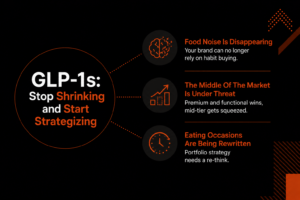
As an industry we strategize and plan around occasions – breakfast, lunch, dinner, mid-morning snacking, mid-afternoon slumps, occasion-based segmentations, demand spaces. But GLP1s disrupt this logic. Users do not just eat less; they eat differently across the day. Brands who win, will be those who interrogate and adapt their portfolio design accordingly.
Calorie reduction will not hit brands hardest, the silencing of ‘food noise’ will
How many people eat because it’s there? Because they’re bored? Or because mindless munching feels good? A large part of food volume comes from autopilot behavior. GLP1s turn down this setting. Food choices are considered and so products need to re-earn their place. Brands will no longer be able to rely on habit and mental availability. Putting the big players at risk from challenger brands with sharper propositions.
The meaning of Fullness is changing
Products filling you up have always been a good thing and a strong value cue, but GLP1s complicate this. Users satiate more quickly and report discomfort from heavy or overly filling products. Brands cannot just look to portion size to address this. Brand who are looking to win will be those who look beyond portion size to consider reformulating for lighter digestion and achieving a different kind of satiety.
GLP1 users do not exist in isolation
A GLP1 user in the household will impact what gets bought for the household. Children and partners will be exposed to these daily shifts, and new eating patterns will become normalized. Brands playing to win should position beyond just early adopters and look at boarder, more inclusive health messaging, and pay attention to family propositions.
The Lipstick effect and mid-tier risk
If you’re eating less, you’re likely to be more willing to pay for higher quality and more premium options when you do eat. Premium and functional products which hit the right notes are likely to do well. But ‘weaker’ mid-tier products are likely to be squeezed. Most large portfolios will be overexposed in the middle.
The rules for resonant messaging are changing
How people think and talk about food is changing. Brands intent on winning need to pay attention and notice the shifts in how consumers talk and think about food. Aligning themselves to the underlying human motivations will help them succeed.
The big learning: this is a behavioral shift with structural impact. Winning brands won’t just reformulate; they’ll redesign their portfolios to stay relevant in people’s lives.
GLP-1s are rewriting the rules of consumption. Is your portfolio ready? Let’s talk.