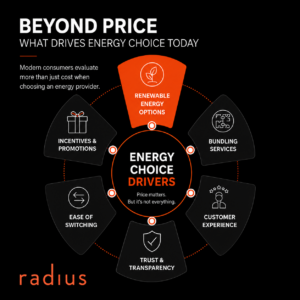
In today’s dynamic energy markets, consumers are increasingly motivated by factors beyond just cost savings. This is true in deregulated markets, when consumers can choose their energy providers and, alternatively, in regulated markets where customer perception and satisfaction is critical for cross-selling opportunities and to ease rate case activities.
While lower rates remain the primary driver, several other critical elements are shaping consumer decisions:
- Renewable Energy Options
- Bundling Services
- Customer Experience
- Trust & Transparency
- Ease of Switching
- Incentives & Promotions
There’s a lot to consider here and, as such, I will limit this post to dive deeper into the first point: Renewable Energy Options. While most energy providers are actively working to provide these options to customers, does offering renewable power actually make a difference? The answer is “yes, with some caveats to consider”.
What the Data Tells Us
Recent U.S. research shows that customers want to see their utility investing in renewable energy. In E Source’s national survey, 63% of respondents agreed that utilities should source more of their supply from renewables, and 60% said they prefer to buy from companies that take visible environmental action.
Similarly, J.D. Power data finds that awareness of a utility’s environmental efforts can lift customer satisfaction scores by roughly 100 points on a 1,000-point scale. That’s a meaningful jump in an industry where perception directly affects regulatory outcomes and brand loyalty.
However…
Enthusiasm for renewable power doesn’t always translate into behavior. Typically, we find that low awareness restricts adoption and positive outcomes for the provider. And while some are even willing to pay a premium for the option, adoption is often limited to the most ‘environmentally conscious’ customers.
In other words: the offer itself isn’t enough. The difference lies in how utilities communicate, price, and position these programs.
Communication equates to visibility and storytelling: customers reward transparency and credible communication around renewables. Specifically, if able, talk about local impacts of renewables (facilities, jobs)
Price premiums need to feel fair and purposeful; otherwise, goodwill can erode.
Position the offering to capture environmentally motivated customers who respond strongly, while others require clearer economic or community benefits.
Why Do We Care?
We have found that utilities with higher trust and satisfaction scores often enjoy smoother rate case outcomes, and stronger program participation yielding a much stronger brand.
While offering renewable power options is increasingly a table stake, the true opportunity lies in how utilities leverage data and insights to design, message, and measure these programs. Thoughtful segmentation, behavioral defaults, and transparent storytelling can turn a compliance-driven initiative into a brand-building advantage.